
GFRP Rebars: Rust-Free Reinforcement for Concrete
Glass fibre reinforced polymer (GFRP) bars are a lightweight, corrosion-free alternative to steel rebar for floors, paving, drains, compound walls and other non-structural concrete work.
- ~¼ the weight of steel
- No rust, ever
- Non-magnetic & non-conductive
- IS 18256:2023
Backed by India’s Highways Minister
“हम ग्लास फाइबर स्टील लेकर आए हैं, कीमत कम है, मजबूत ज्यादा है, इसमें जंग नहीं लगता।”“We have brought glass fibre steel. It costs less, it is stronger, and it doesn’t rust.”
Shri Nitin Gadkari, Union Minister of Road Transport & Highways, in an interview with CNBC Awaaz (September 2024)
Glass fibre (GFRP) rebars are now part of India’s push for longer-lasting, rust-free infrastructure, and are covered by the BIS standard IS 18256:2023.
What Is a GFRP Rebar?
A GFRP rebar is a bar made of thousands of glass fibres held together in a strong resin, with a ribbed or sand-coated surface so it grips the concrete.
It goes into concrete exactly where steel bars would go, but it is made of glass and resin instead of iron. That means it simply cannot rust. It is also about one-quarter the weight of steel, so it is easy to carry, cut and tie on site.
In India, GFRP bars are covered by IS 18256:2023, the BIS specification for GFRP bars used in concrete.
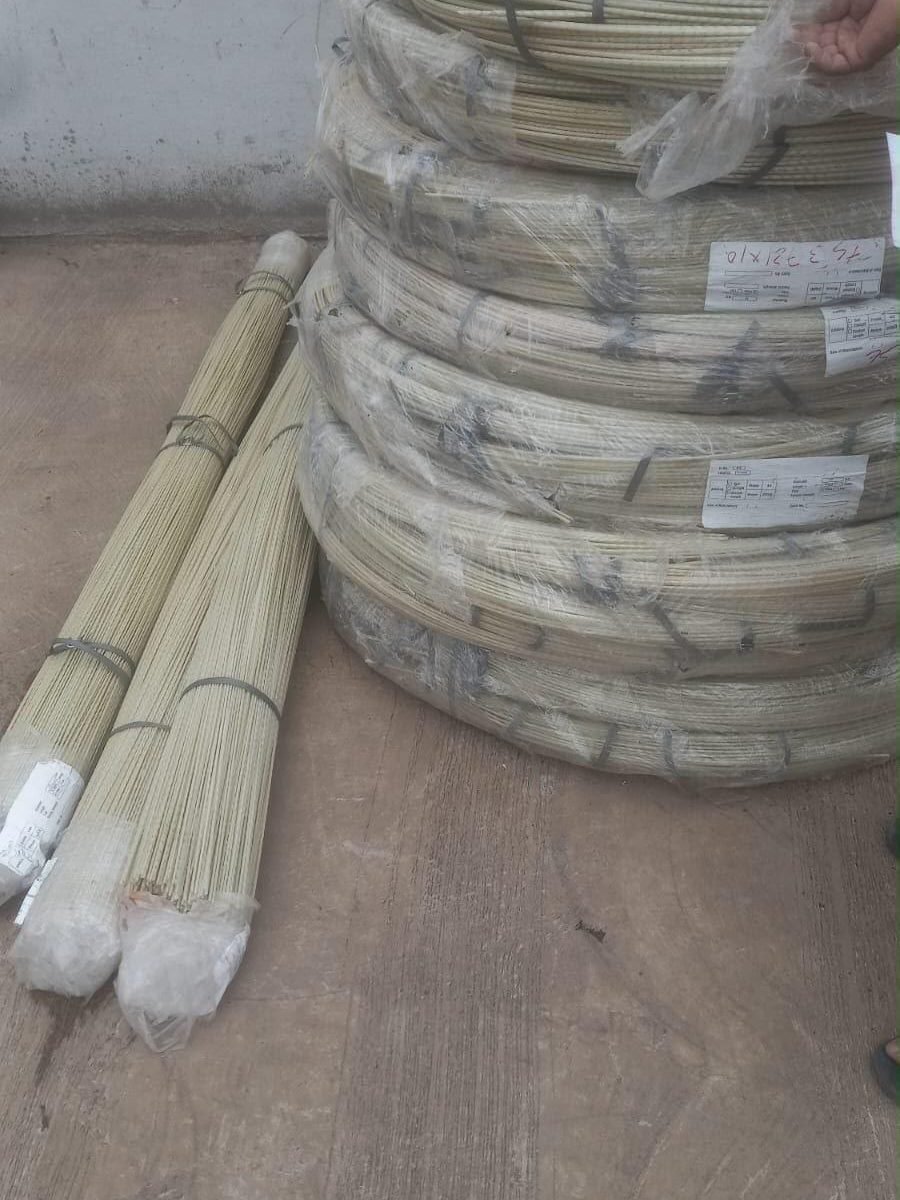
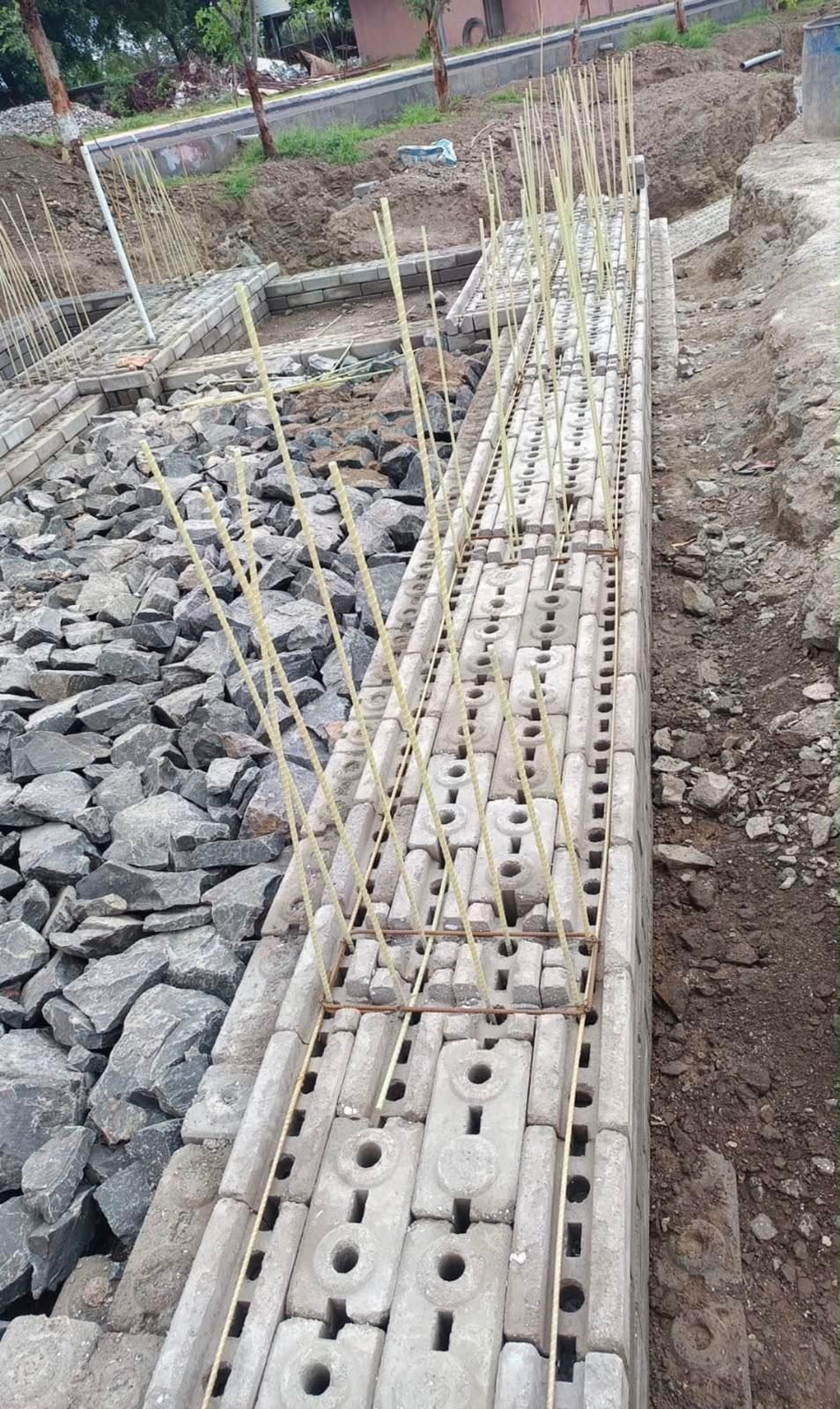
GFRP Rebars on Site
Supplied in long coils and straight lengths, light enough to handle by hand, and tied with the same binding wire or plastic ties as steel.
Why Use GFRP Instead of Steel
Never Rusts
No rust means no swelling, no cracking and no concrete falling off later. Ideal for wet, salty and coastal areas like Mumbai.
About ¼ the Weight
A 12 mm GFRP bar weighs roughly 0.24 kg per metre, compared with 0.89 kg for 12 mm steel. Faster to carry, load and fix.
High Tensile Strength
Minimum guaranteed tensile strength of about 600–800 MPa depending on size, higher than the 500 MPa yield of Fe 500 steel.
Non-Magnetic & Non-Conductive
Does not carry electricity or affect magnetic fields. Useful near electrical equipment, transformers and sensitive machines.
Chemical Resistant
Stands up to salt water, sewage and most chemicals that eat away at steel, so it suits drains, tanks and treatment areas.
Lower Lifetime Cost
No anti-rust coating and no repairs from rusted bars. You pay once and the reinforcement lasts.
GFRP Rebar vs Steel Rebar
A quick, honest comparison. GFRP wins on durability and weight; steel is stiffer and can be bent on site.
| Property | GFRP rebar | Steel rebar (Fe 500) |
|---|---|---|
| Rust / corrosion | Does not rust | Rusts in moisture and salt |
| Weight (12 mm bar) | ≈ 0.24 kg/m | ≈ 0.89 kg/m |
| Tensile strength | ≈ 600–800 MPa minimum guaranteed (size-dependent) | 500 MPa yield |
| Stiffness (elastic modulus) | ≥ 45 GPa | ≈ 200 GPa |
| Behaviour at failure | Elastic until it breaks (no yielding) | Yields and stretches before failure |
| Bending | Factory-made bends only | Can be bent on site |
| Electricity & magnetism | Non-conductive, non-magnetic | Conductive, magnetic |
| Maintenance | None for corrosion | Needs good cover / coating to delay rust |
GFRP values from IS 18256:2023 (Tables 1 & 2). Weight from our GFRP weight table. Steel values per IS 1786 / IS 456.
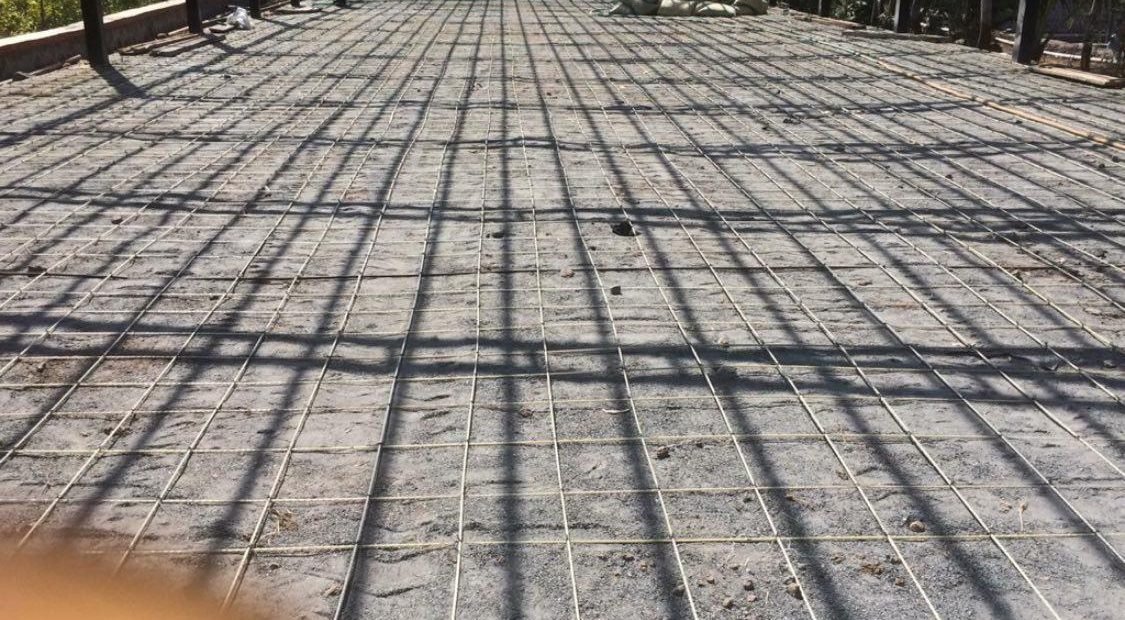
Where GFRP Rebars Are Used (Non-Structural)
IS 18256:2023 is meant for low-risk concrete elements, where a failure would have limited consequences. That covers a lot of everyday site work.
Standards for GFRP Rebars
GFRP bars are covered by an Indian Standard from BIS, as well as well-known international standards.
Under IS 18256, every lot comes with a manufacturer’s test certificate, and each bar is marked every 2 m with the brand, size and guaranteed tensile load.
Key Quality Requirements
| Glass fibre content | At least 75% by weight |
|---|---|
| Resin | Vinylester or epoxy only (no polyester) |
| Tensile modulus | At least 45 GPa |
| Ultimate tensile strain | At least 1.1% |
| Bond strength | At least 7.6 MPa |
| Transverse shear strength | At least 130 MPa |
| Alkali resistance | Keeps at least 80% of strength after 90 days in alkaline solution at 60 °C |
| Moisture absorption | ≤ 0.25% (24 h), ≤ 1% (long term) |
| Glass transition temp. (Tg) | At least 100 °C |
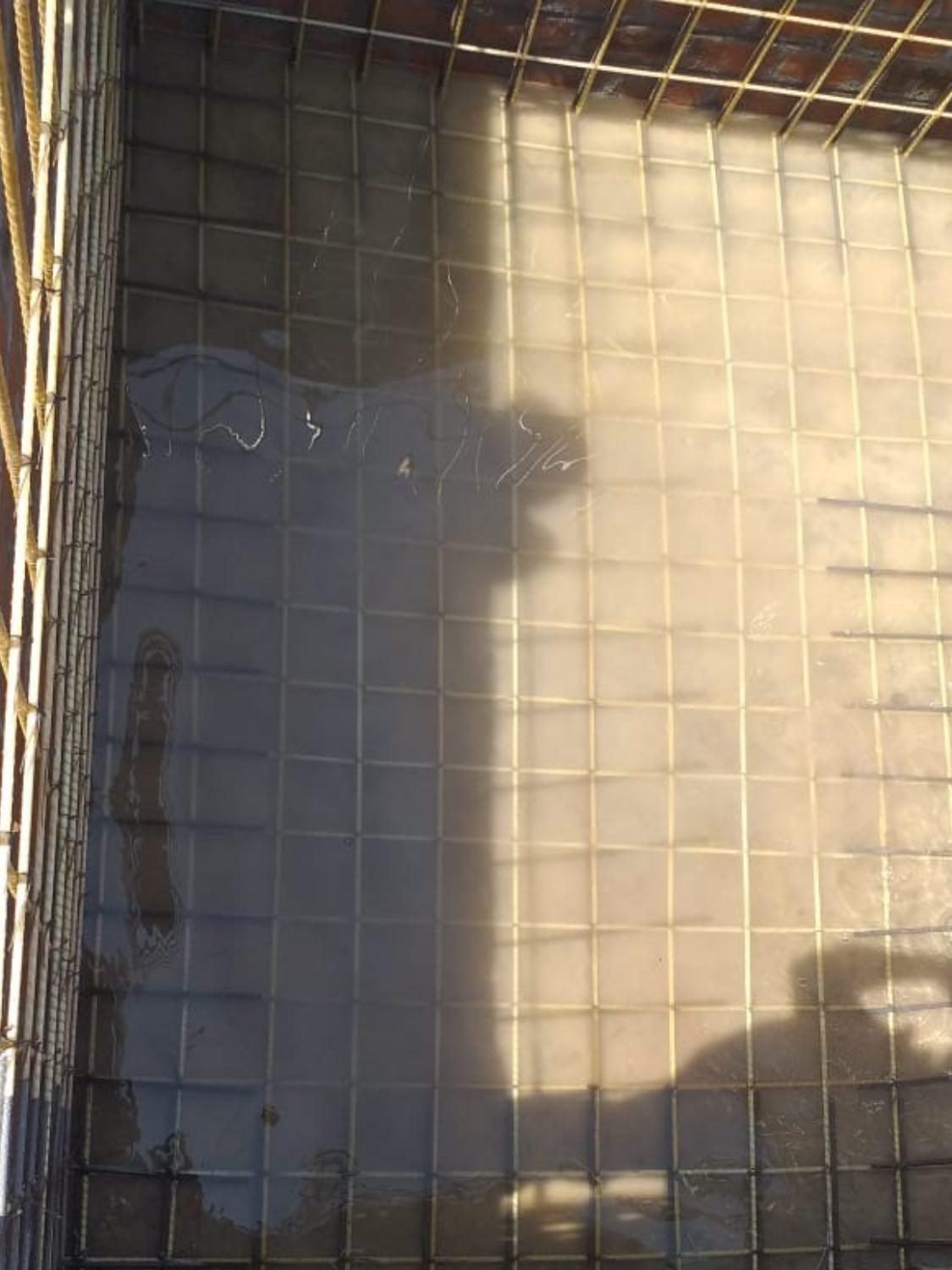
GFRP Bar Sizes
We supply GFRP bars from 3 mm to 32 mm. Because GFRP is so light, one kilogram gives you far more running metres than steel. Ask us on WhatsApp for current stock and lengths.
| Diameter | Weight per metre | Metres per kg | IS 18256 min. tensile load |
|---|---|---|---|
| 3 mm | 0.017 kg | 58.8 m | – |
| 3.5 mm | 0.023 kg | 43.5 m | – |
| 4 mm | 0.030 kg | 33.3 m | 11 kN |
| 4.5 mm | 0.039 kg | 25.6 m | – |
| 5 mm | 0.044 kg | 22.7 m | – |
| 6 mm | 0.065 kg | 15.4 m | 23 kN |
| 7 mm | 0.075 kg | 13.3 m | – |
| 8 mm | 0.113 kg | 8.85 m | 40 kN |
| 9 mm | 0.133 kg | 7.52 m | – |
| 10 mm | 0.170 kg | 5.88 m | 60 kN |
| 12 mm | 0.240 kg | 4.16 m | 80 kN |
| 14 mm | 0.270 kg | 3.70 m | – |
| 16 mm | 0.427 kg | 2.34 m | 130 kN |
| 18 mm | 0.523 kg | 1.91 m | – |
| 25 mm | 0.873 kg | 1.22 m | 270 kN |
| 32 mm | 1.360 kg | 0.73 m | 420 kN |
Weights are approximate and can vary slightly between batches. Tensile loads are the minimum guaranteed values set by IS 18256:2023 for its standard bar sizes; “–” means the size is not one of the standard’s listed sizes.
Smaller bars are supplied in coils or straight bundles; larger bars in straight lengths. Bends and stirrups are made in the factory, because GFRP bars must not be bent on site.
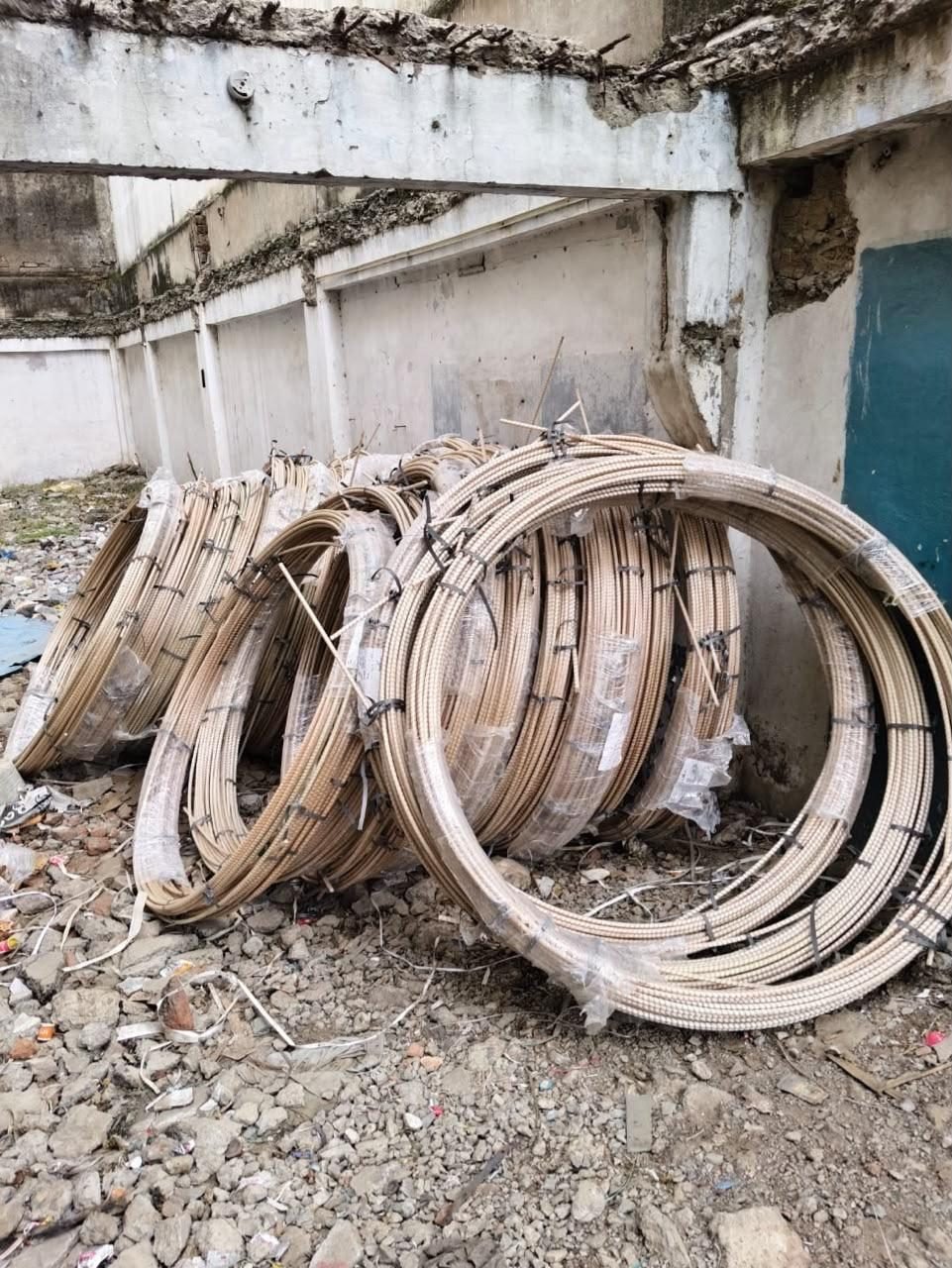
Simple Tips for Using GFRP Bars
- Cut with a diamond or abrasive blade (grinder). Do not shear or hammer.
- Tie with binding wire, plastic-coated wire or plastic ties.
- Order bends, rings and stirrups ready-made. Do not heat or bend bars on site.
- Use cover blocks / chairs so the mesh sits at the right height.
- Store bars off the ground and out of long direct sunlight.
- Wear gloves when handling cut ends.
Get a Quote for GFRP Rebars
Tell us the bar size, quantity and delivery location on WhatsApp and we’ll get back to you with the best offer.
GFRP Rebars — Frequently Asked Questions
Is there a BIS standard for GFRP rebars?
Yes. IS 18256:2023 is the Indian Standard for solid round GFRP bars used to reinforce concrete. It sets limits for strength, stiffness, bond, durability, materials and bar marking.
Is GFRP rebar stronger than steel?
In pure tension, yes — its guaranteed tensile strength is higher than the yield strength of Fe 500 steel. But it is about four times less stiff and does not yield before breaking, so it cannot simply replace steel bar-for-bar in structural members without design by an engineer.
Where can I use GFRP instead of steel?
It is well suited to floors and slab-on-grade, pavements, footpaths, drains, compound walls, fencing, manhole chambers, precast items and coastal works — low-risk concrete where rust is the main problem.
Can GFRP bars be bent on site?
No. Bends, rings and stirrups have to be made in the factory. Tell us the shapes you need and we’ll arrange them.
How do I cut GFRP rebar?
Use a grinder or saw with a diamond or abrasive blade. Wear gloves and a dust mask while cutting.
What has the government said about GFRP rebars?
In a CNBC Awaaz interview in September 2024, Union Road Transport & Highways Minister Nitin Gadkari spoke in favour of glass fibre rebars, saying they cost less, are stronger and do not rust. BIS has also published IS 18256:2023, the Indian Standard for GFRP bars in concrete.
How do I get the price?
Prices depend on bar size, quantity and delivery location. Send your requirement on WhatsApp and we’ll reply with the best offer.