
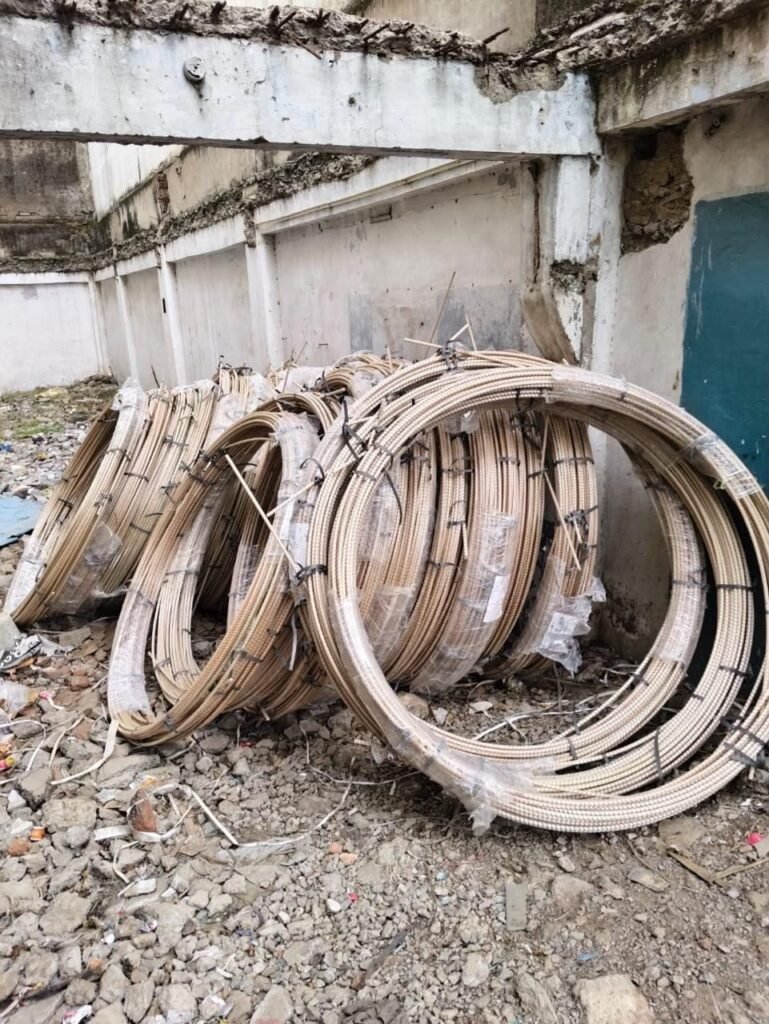
In March 2026, a video went viral claiming that “plastic sariya” was being used to build drains on the new Indore–Ujjain six-lane road. Officials and experts inspected the site and set the record straight: the bars were not plastic but GFRP (glass fibre reinforced polymer) sariya, used as per the Indian Roads Congress guideline IRC:137-2022. Since then, GFRP sariya has been all over Hindi news, and homeowners, builders and contractors are asking the same question: should I use GFRP sariya instead of TMT sariya?
This guide gives you an honest answer: what GFRP sariya really is, how it compares with TMT on strength, weight and price, where it works well in a house or building, and where TMT is still the right choice. There is a short summary in Hindi at the end.
Is GFRP Sariya Really “Plastic Sariya”?
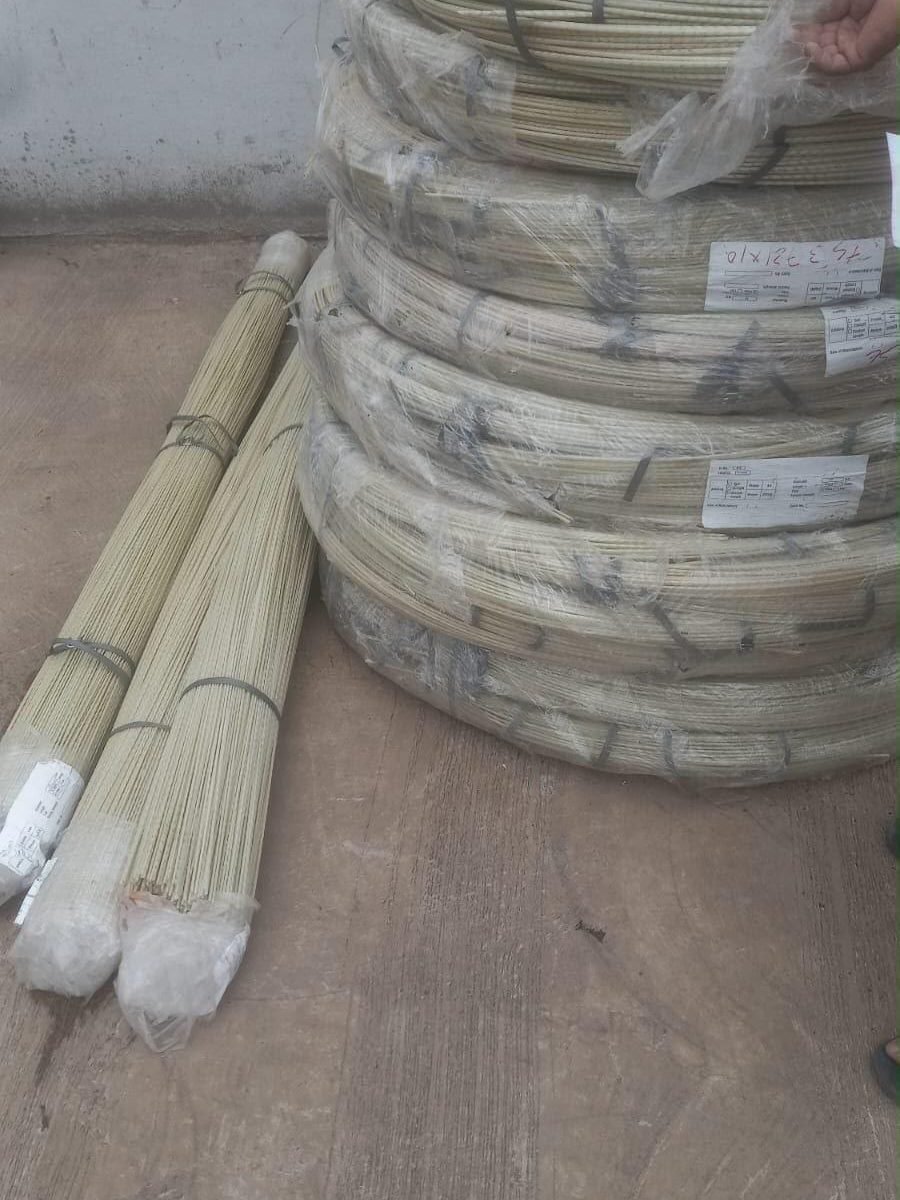
No. GFRP sariya is made of thousands of continuous glass fibres bonded together with a strong thermosetting resin. It is light and non-metallic, which is why it looks like plastic, but it behaves very differently. Weight for weight, it is far stronger than ordinary plastic, and its tensile strength is higher than that of steel TMT bars.
GFRP bars now have their own Indian standard, IS 18256:2023, published by the Bureau of Indian Standards, and road guidelines in IRC:137-2022. Large steel companies have noticed too: Tata Steel now lists GFRP rebar alongside its TMT range.
GFRP Sariya vs TMT Sariya: Side-by-Side
| Factor | GFRP sariya | TMT sariya |
|---|---|---|
| Material | Glass fibre + resin composite | Steel |
| Weight (12 mm bar) | About 0.24 kg per metre | About 0.89 kg per metre |
| Tensile strength | Higher; Indian bars typically around 1,000 MPa | Fe 500 grade: minimum yield strength 500 MPa |
| Stiffness | Lower, roughly a quarter to a third of steel | Higher |
| Behaviour before breaking | Stays straight until it breaks; does not yield | Bends and stretches first, giving warning |
| Rust | Never rusts | Rusts, especially in damp and coastal areas |
| Bending on site | Not possible; bends and rings come from the factory | Bent on site as needed |
| Heat and fire | Lower resistance | Better resistance |
| Electricity and magnetism | Non-conductive, non-magnetic | Conductive, magnetic |
| Indian standard | IS 18256:2023 (bars), IRC:137-2022 (roads) | IS 1786 |
GFRP Sariya Price vs TMT: Per Kg and Per Metre
This is where most people get confused. Per kilogram, GFRP sariya looks expensive. But because it weighs about a quarter as much, what you actually pay per running metre is a very different story. Here is an illustrative comparison for 12 mm bars:
| 12 mm bar | Price per kg | Weight per metre | Approx. cost per metre |
|---|---|---|---|
| TMT sariya | ₹56–66 (Pune retail, October 2026) | ≈0.89 kg | ≈₹50–59 |
| GFRP sariya (market) | ₹140–160 (typical marketplace listings) | ≈0.24 kg | ≈₹34–38 |
| Grandform Fiber GFRP sariya | From ₹150 (ex-GST, October 2026) | ≈0.24 kg | ≈₹36 |
Prices vary by city, brand, size and quantity, and exclude GST and transport. One important caution: GFRP is not a bar-for-bar replacement for TMT. Because it is less stiff, an engineer may specify a different size or spacing, so always compare the cost of the designed reinforcement, not just the price of one bar. GFRP also saves money over time: no rust means fewer repairs, and lighter bars mean cheaper transport and faster handling.
Where GFRP Sariya Works Well in a House or Building
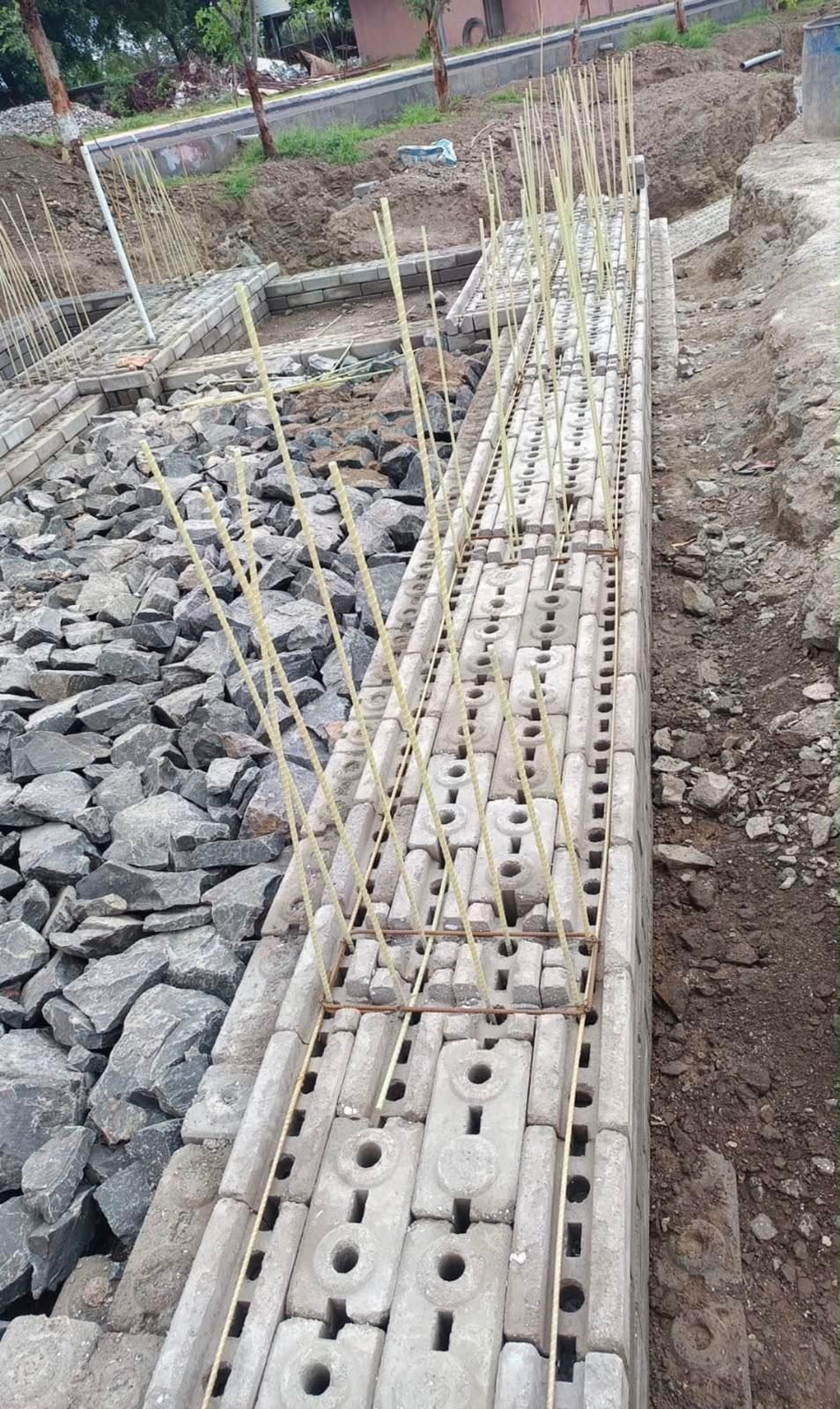
BIS says GFRP bars conforming to IS 18256 suit low-risk reinforced concrete elements, giving examples such as slab-on-grade (pavements and floorings), drainage structures, fences and manhole covers. For a typical home, society or commercial building, that points to:
- Compound and boundary walls: exposed to rain on both sides, where TMT often rusts and cracks the plaster.
- Ground floors, parking and driveway slabs: slabs resting on the ground, a use BIS names directly.
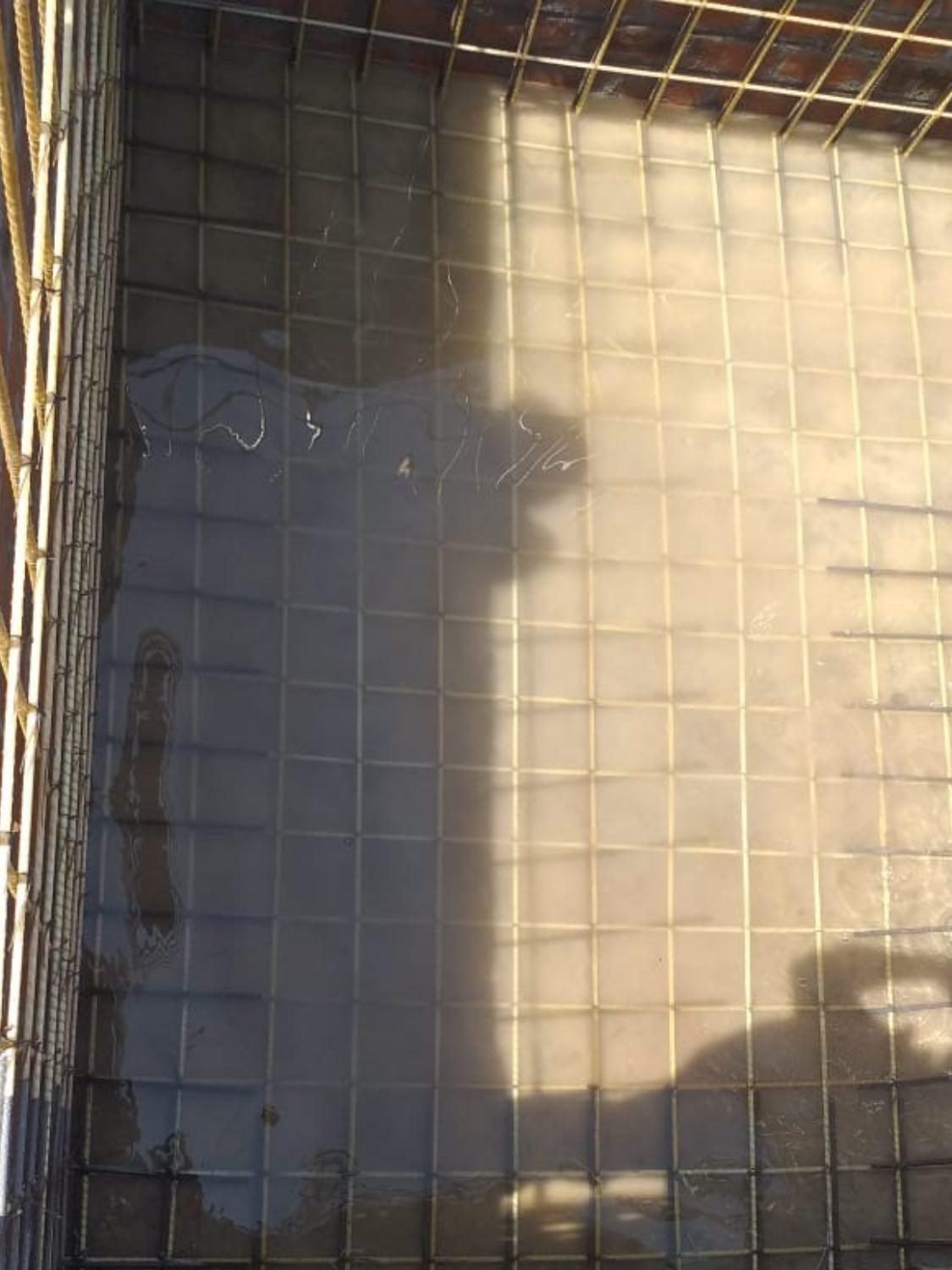
- Water tanks and sumps: permanently wet, so rust-free reinforcement makes sense, designed by your engineer.
- Drains, chambers and manholes: constant moisture and sewage gases corrode steel quickly.
- Coastal homes and buildings: salty air is the fastest route to TMT corrosion, a daily reality in Mumbai and along the coast.
Where TMT Sariya Is Still the Right Choice
Be careful with claims that GFRP can replace steel everywhere. For the main frame of a building, which means columns, beams, roof slabs, staircases and footings, use TMT unless a qualified structural engineer has designed that element specifically for GFRP. Indian standards currently cover GFRP for low-risk elements and specific road components, not for the full structural frame of houses and buildings.
There is a good reason for this. TMT bends and stretches before it breaks, which gives a building warning signs and helps it ride out earthquakes. GFRP stays straight until it breaks. That is why GFRP is best used where rust is the main threat and loads are moderate, and why the smartest projects use both materials, each where it fits best.
Why Government Roads Are Using GFRP Sariya
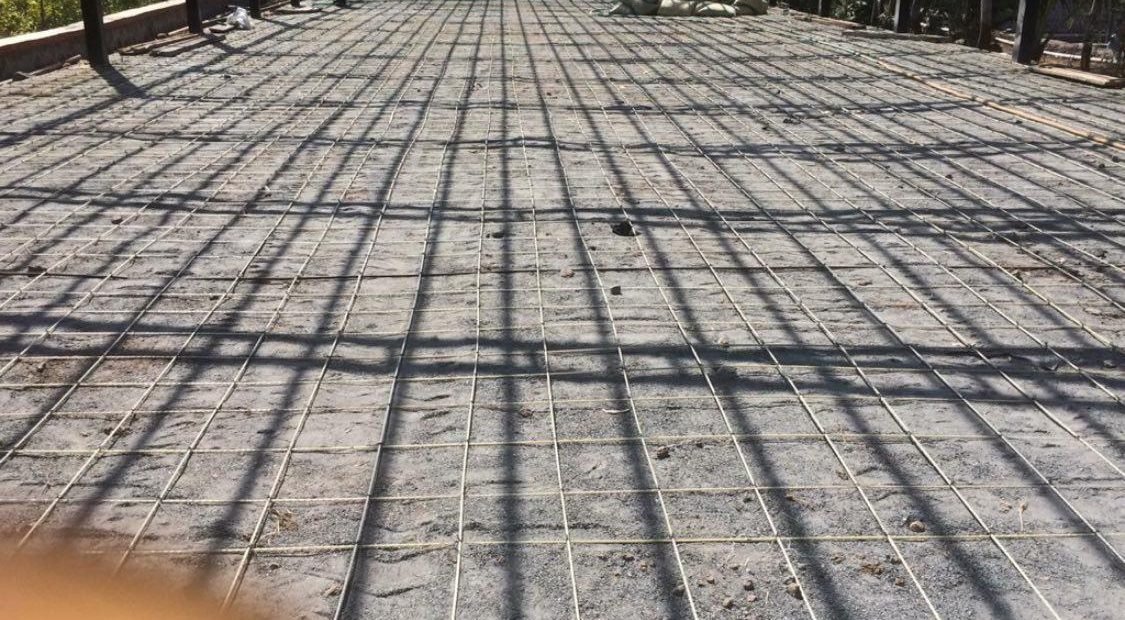
The Indore–Ujjain project is not a one-off. IRC:137-2022, framed at the request of the Ministry of Road Transport and Highways, allows GFRP in 13 road components, including concrete pavements, approach slabs, culverts, crash barriers and drainage structures. Union Minister Nitin Gadkari has also publicly backed glass fibre bars, describing them as cheaper, stronger and rust-free. Read our full guide to GFRP rebar approvals and standards in India.
Tips for Using GFRP Sariya on Site
- Order bends from the factory. GFRP cannot be bent on site, so plan your bar bending schedule and order rings, L-bends and stirrups in advance.
- Cut with a grinder. Use a diamond or abrasive blade.
- Tie properly. Use binding wire, plastic-coated wire or plastic ties. Road projects under IRC:137-2022 require plastic ties or plastic-coated wire.
- Use cover blocks to keep the bars at the right height in the concrete.
- Store bars off the ground and shaded from strong sun until use.
हिंदी में सारांश: GFRP सरिया बनाम TMT सरिया
- GFRP सरिया प्लास्टिक का सरिया नहीं है। यह ग्लास फाइबर और मजबूत रेज़िन से बना कंपोजिट है, जिसका अपना भारतीय मानक IS 18256:2023 है।
- जंग नहीं लगता: नमी, नाली और समुद्री हवा वाली जगहों के लिए यह बड़ा फायदा है।
- वज़न लगभग एक-चौथाई: 12 mm GFRP सरिया करीब 0.24 किलो प्रति मीटर होता है, जबकि 12 mm TMT करीब 0.89 किलो प्रति मीटर।
- रेट: प्रति किलो GFRP महंगा दिखता है, लेकिन प्रति मीटर यह अक्सर TMT से सस्ता पड़ता है। Grandform Fiber में GFRP सरिया ₹150 प्रति किलो से शुरू (GST अलग), यानी 12 mm सरिया लगभग ₹36 प्रति मीटर।
- कहां लगाएं: बाउंड्री वॉल, ज़मीन पर बनी फ्लोरिंग और पार्किंग, पानी की टंकी, नाली और चैंबर।
- कहां TMT ही लगाएं: कॉलम, बीम, छत का स्लैब, सीढ़ी और फाउंडेशन, जब तक स्ट्रक्चरल इंजीनियर GFRP के हिसाब से डिज़ाइन न करे।
- ध्यान रखें: GFRP सरिया साइट पर मोड़ा नहीं जा सकता। रिंग और मोड़ फैक्ट्री से बनवाकर मंगवाएं।
FAQs: GFRP Sariya vs TMT Sariya
Is GFRP sariya stronger than TMT?
In tension, yes: GFRP has higher tensile strength. But it is less stiff and does not bend before breaking, so it is not a direct replacement for TMT in every element.
Can I use GFRP sariya to build my whole house?
Not for the main frame. Use GFRP for boundary walls, ground slabs, tanks and drains, and TMT for columns, beams, roof slabs and footings, unless a structural engineer designs those elements for GFRP.
What is the GFRP sariya rate?
Typical marketplace listings are around ₹140–160 per kg, but because GFRP is so light, a 12 mm bar works out to roughly ₹34–38 per metre, compared with about ₹50–59 per metre for 12 mm TMT at current Pune retail prices. Grandform Fiber’s GFRP sariya starts from ₹150 per kg (ex-GST, as of October 2026), about ₹36 per metre for 12 mm, with bulk and dealer rates on request.
Is GFRP sariya approved by the government?
GFRP bars have a BIS product standard (IS 18256:2023), and IRC:137-2022 allows them in specified road components. Government projects such as the Indore–Ujjain six-lane road are already using them.
Can GFRP sariya be bent on site?
No. Order bent bars, rings and stirrups from the factory along with your straight bars.
Buy GFRP Sariya from Grandform Fiber
Grandform Fiber supplies GFRP sariya from 3 mm to 32 mm, starting from ₹150 per kg (ex-GST), in coils and straight lengths, with bends and rings made in the factory and pan-India dispatch. See all sizes, weights and specifications on our GFRP rebar page, or send us your size, quantity and site location on WhatsApp.
Sources
- India TV Hindi, GFRP sariya on the Indore–Ujjain six-lane project (March 2026)
- Webdunia, officials clarify GFRP use in RCC drainage (March 2026)
- Tata Nexarc, TMT bar price in Pune (October 2026)
- IndiaMART, GFRP rebar listings and prices
- L&T-SuFin, GFRP rebar listings including Tata Steel
- Bureau of Indian Standards, IS 18256:2023
- Indian Roads Congress, IRC:137-2022, Guidelines on Use of Fibre-Reinforced Polymer Bars in Road Projects