
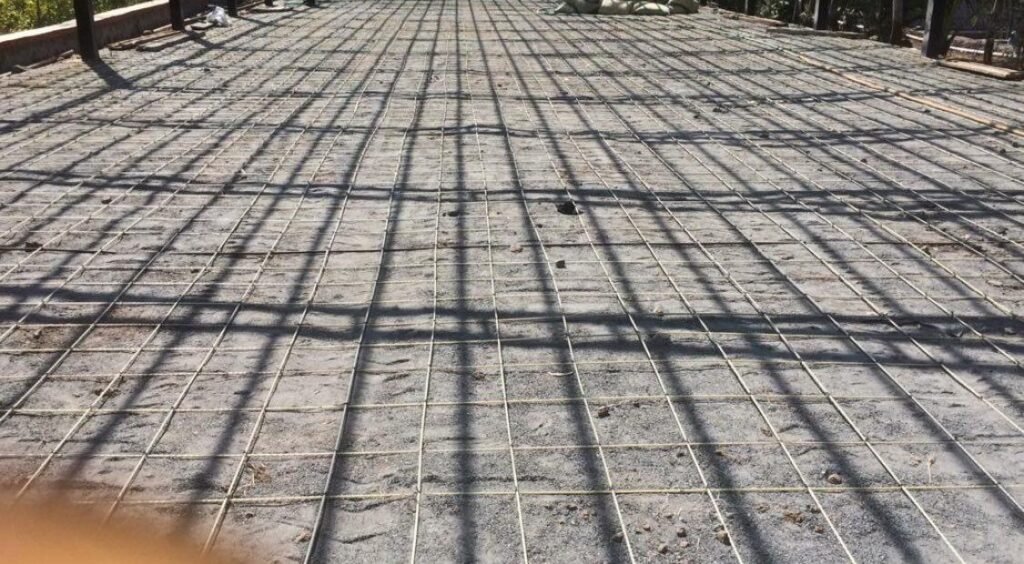
Steel corrosion quietly shortens the life of India’s roads, bridges, drains and coastal structures. GFRP rebar (glass fibre reinforced polymer rebar) removes that problem at the source: it does not rust. With Union Highways Minister Nitin Gadkari publicly backing glass fibre rebars, the Ministry of Road Transport and Highways (MoRTH) commissioning dedicated guidelines for their use in road projects, and the Bureau of Indian Standards (BIS) publishing a national specification, GFRP rebar has moved from a niche material to a serious option for highways, parking areas, industrial floors and drainage works.
This guide explains what GFRP rebar is, exactly where Indian guidelines allow it today, how it compares with steel TMT bars, what to watch out for on site, and where the market is heading.
What Is GFRP Rebar?
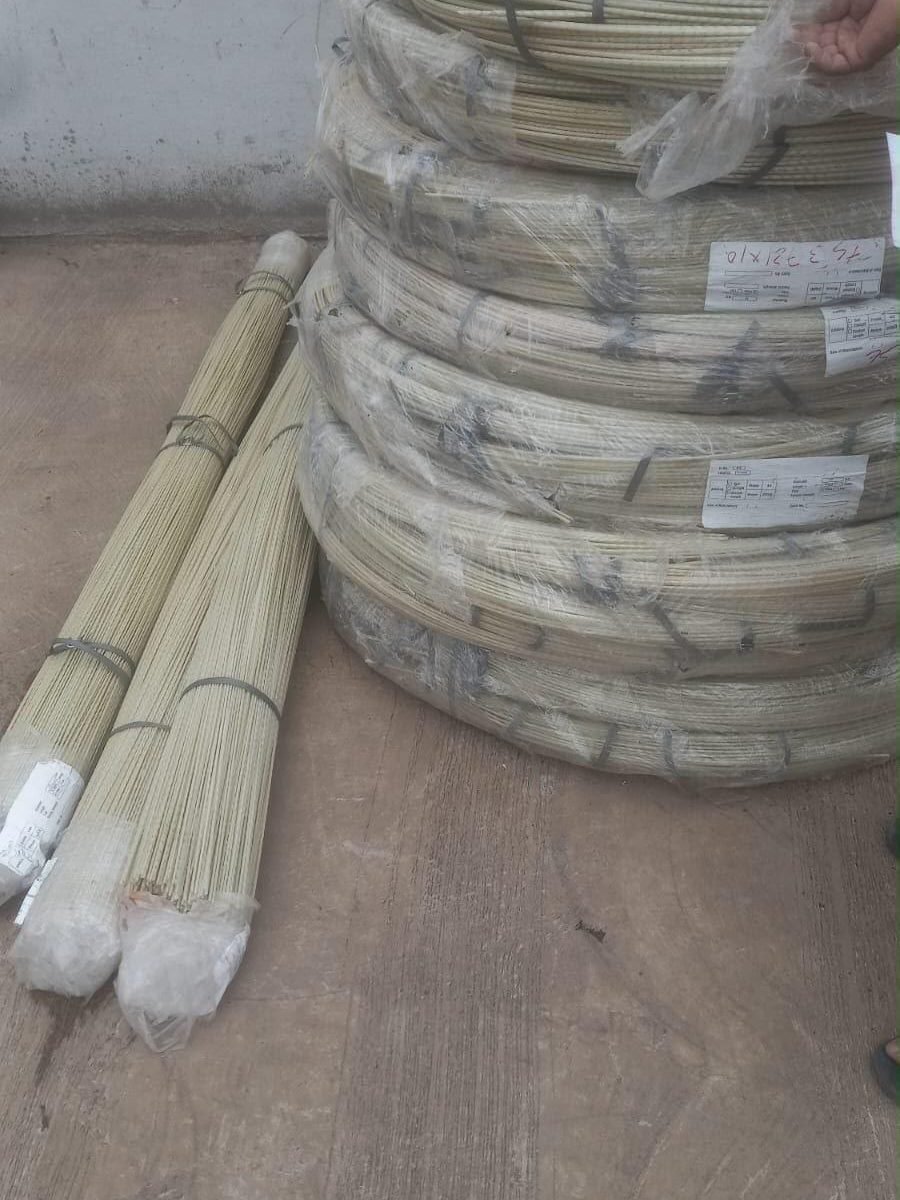
GFRP rebar is a reinforcing bar made of continuous glass fibres held together in a polymer resin. It is usually produced by pultrusion: the fibres are pulled through a resin bath and then a shaping die where the resin cures, which makes the bar very strong along its length. A sand coating, ribs or a helical wrap is added to the surface so the bar grips the concrete.
Because it contains no iron, GFRP rebar cannot rust. It is also non-conductive and non-magnetic, so it is used where steel causes problems, such as around sensitive electrical equipment and in MRI rooms.
Why India Is Turning to GFRP Rebar Now
Corrosion is the biggest threat to concrete
IRC:137-2022 notes that the life of a reinforced concrete structure is usually decided by how long its steel takes to corrode and lose strength. India’s long eastern and western coastlines expose a large share of road infrastructure to marine conditions that speed this up, and early deterioration means more repairs and a higher lifecycle cost.
Union Road Transport and Highways Minister Nitin Gadkari has flagged the same problem. In January 2022 he described rusting steel as a common problem in Mumbai and other coastal areas, and suggested a rule might be needed to use only stainless steel within 30–50 km of the sea. He has also repeatedly urged engineers to cut the steel and cement used in roads and bridges without compromising quality.
Backed by India’s Highways Minister
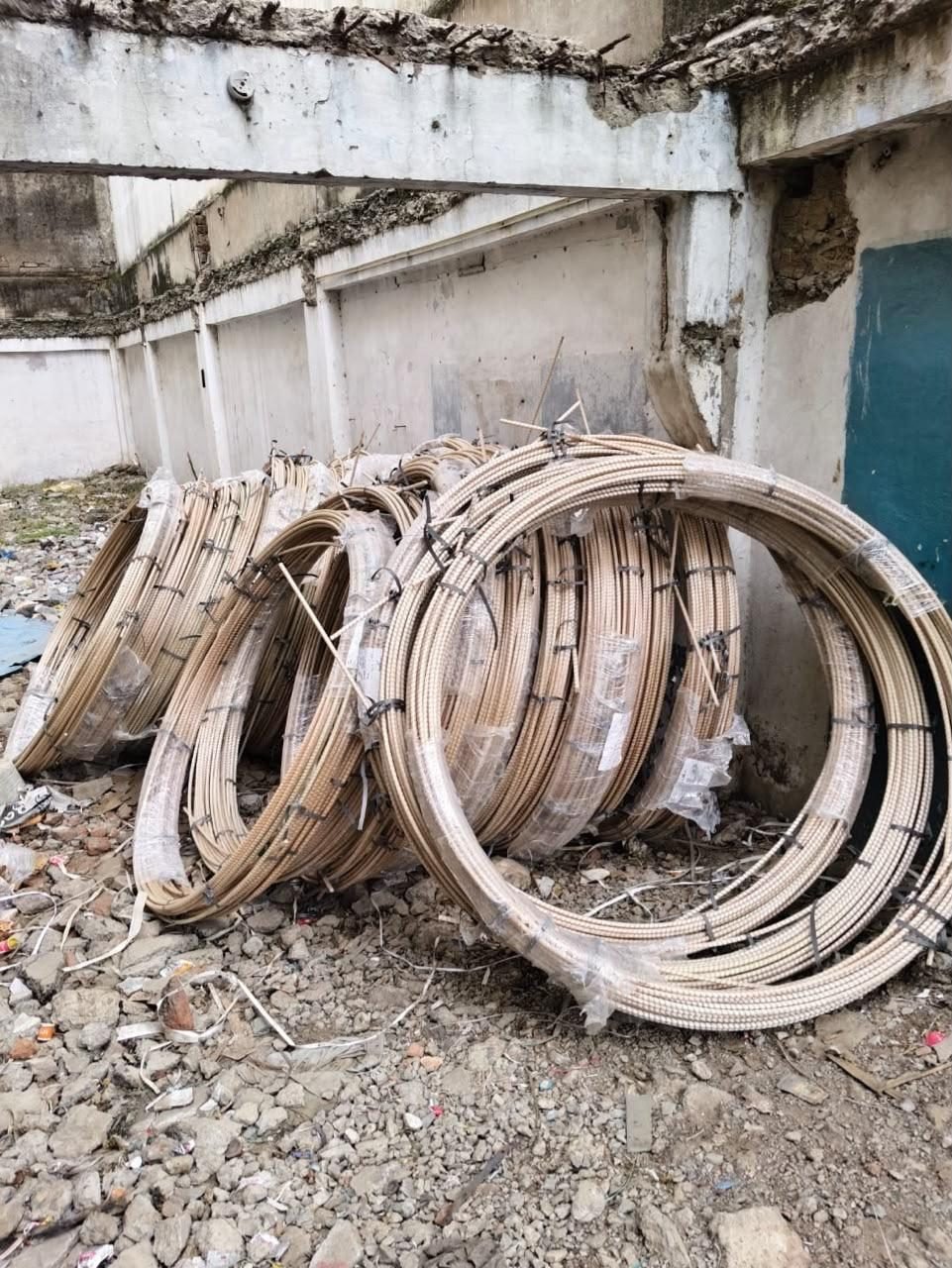
Mr Gadkari has also backed glass fibre rebars directly. Speaking at a national conference for civil engineers in August 2022, he urged the industry to find alternatives to cement and steel, said glass fibre steel can be used in place of steel, and added that competition would bring its cost down. In a September 2024 interview with CNBC Awaaz, he went further:
“हम ग्लास फाइबर स्टील लेकर आए हैं, कीमत कम है, मजबूत ज्यादा है, इसमें जंग नहीं लगता।”
“We have brought glass fibre steel. It costs less, it is stronger, and it doesn’t rust.”
Shri Nitin Gadkari, Union Minister of Road Transport & Highways, CNBC Awaaz (September 2024)
Together with the IRC guidelines and the BIS standard below, this puts GFRP rebar firmly on India’s infrastructure agenda.
A lower-carbon reinforcement option
Steel production is carbon-intensive. IRC:137-2022 cites World Steel Association data showing that each tonne of steel produced in 2019 released about 1.83 tonnes of CO₂, and an International Energy Agency report attributing around 7% of global CO₂ emissions to the steel industry. The same guideline notes that life cycle assessment studies show concrete reinforced with FRP bars can have a much lower environmental impact.
What Is Approved? Indian Guidelines and Standards Explained
Two documents now govern GFRP rebar in India. Understanding both is essential before you specify or buy.
IRC:137-2022: GFRP bars in road projects
MoRTH asked the Indian Roads Congress (IRC) to frame guidelines for fibre-reinforced polymer bars in highway works. An expert committee chaired by R.K. Pandey, Member (NHAI), was formed in March 2021, with a drafting sub-group led by Prof. Ravi Sinha of IIT Bombay. The IRC Council approved the guidelines in June 2022, and they were published in October 2022 as IRC:137-2022, Guidelines on Use of Fibre-Reinforced Polymer Bars in Road Projects (Part 1: Glass Fibre-Reinforced Polymer Bars).
Under IRC:137-2022, GFRP bars may be used in these road project components:
- Approach slabs
- Bridge decks and deck overlays, foot over bridge walkways and slab culverts
- Bridge-cum-bandharas, including deck slabs and barriers between piers
- Concrete roads: jointed plain concrete pavements (JPCP), continuously reinforced concrete pavements (CRCP) and short-panel pavements, cast-in-situ or precast
- Retaining walls
- Noise barriers
- Box culverts
- Crash barriers and bridge parapets
- Pedestrian parapets and railings
- Bulkheads and bulkhead copings
- Mechanically stabilised earth (MSE) wall panels and copings
- Drainage structures
- Plain concrete components
The guideline is clear that GFRP bars must not be used in any other road component, and that only bars made with vinyl ester resin and E-CR or R glass fibres qualify. Loads and analysis follow IRC and MoRTH specifications, while the design of GFRP-reinforced elements follows the AASHTO and ACI standards the guideline adopts.
IS 18256:2023: the BIS product standard
BIS published IS 18256:2023, the Indian specification for solid round GFRP bars for concrete reinforcement. It sets the permitted fibres and resins and the minimum physical, chemical and mechanical properties for straight bars, coils, and bent bars or stirrups. A companion standard, IS 18255:2023, covers test methods.
According to BIS, bars conforming to IS 18256 can be used in low-risk reinforced concrete elements, where the consequences of failure are limited. Its examples are slab-on-grade such as pavements and floorings, drainage structures, fences and manhole covers. That makes GFRP a natural fit for parking slabs, warehouse and industrial floors, and drainage works. For roads, highways and bridges, BIS refers users to the IRC guidelines, and the engineer-in-charge must certify that each GFRP-reinforced element will meet its serviceability, strength and durability targets over its design life.
Where GFRP Rebar Makes the Most Sense
| Application | Why GFRP helps |
|---|---|
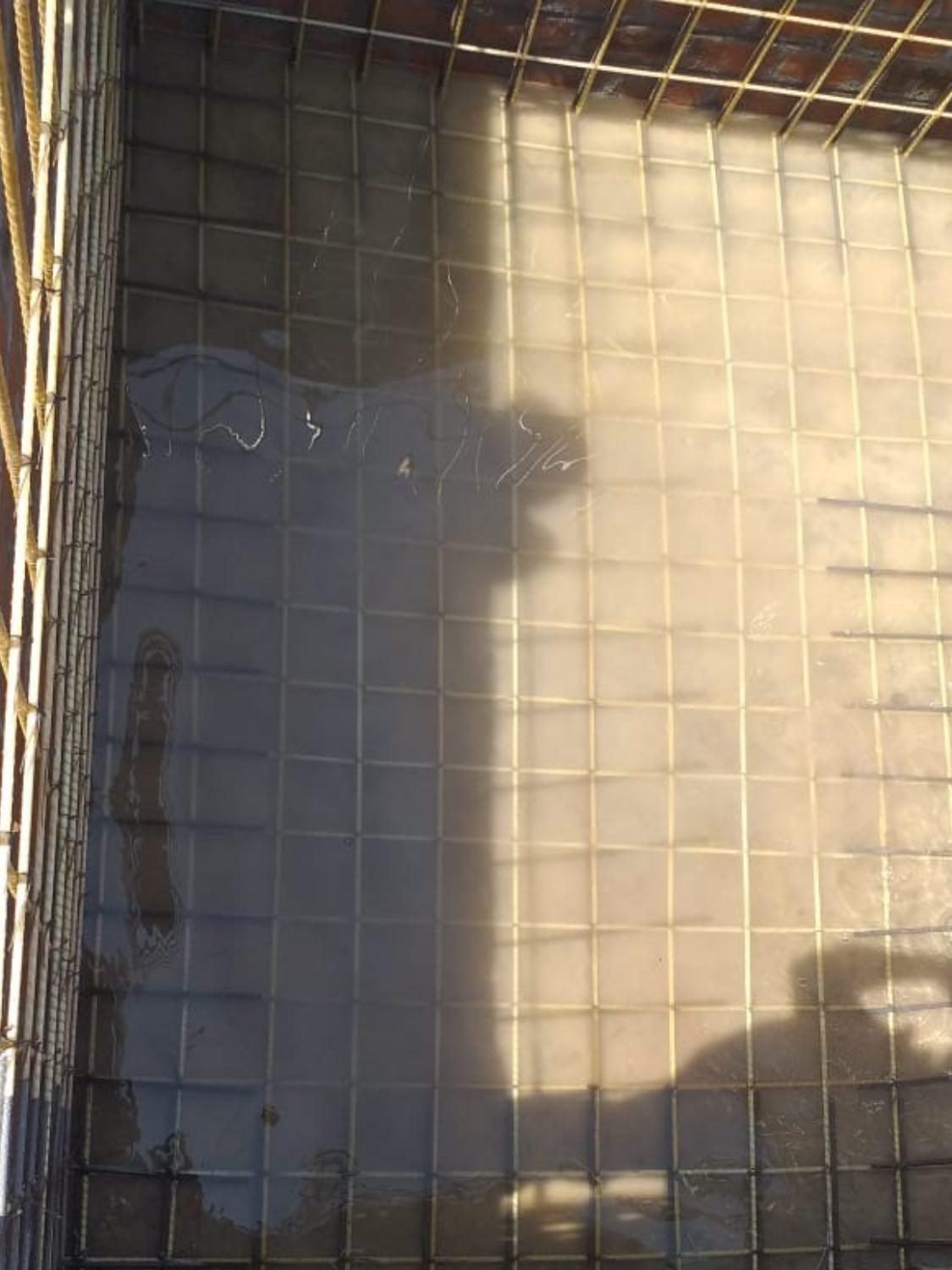
| Highways and concrete roads (JPCP, CRCP, approach slabs) | No corrosion from water entering joints and cracks; lighter bars speed up placing over long stretches |
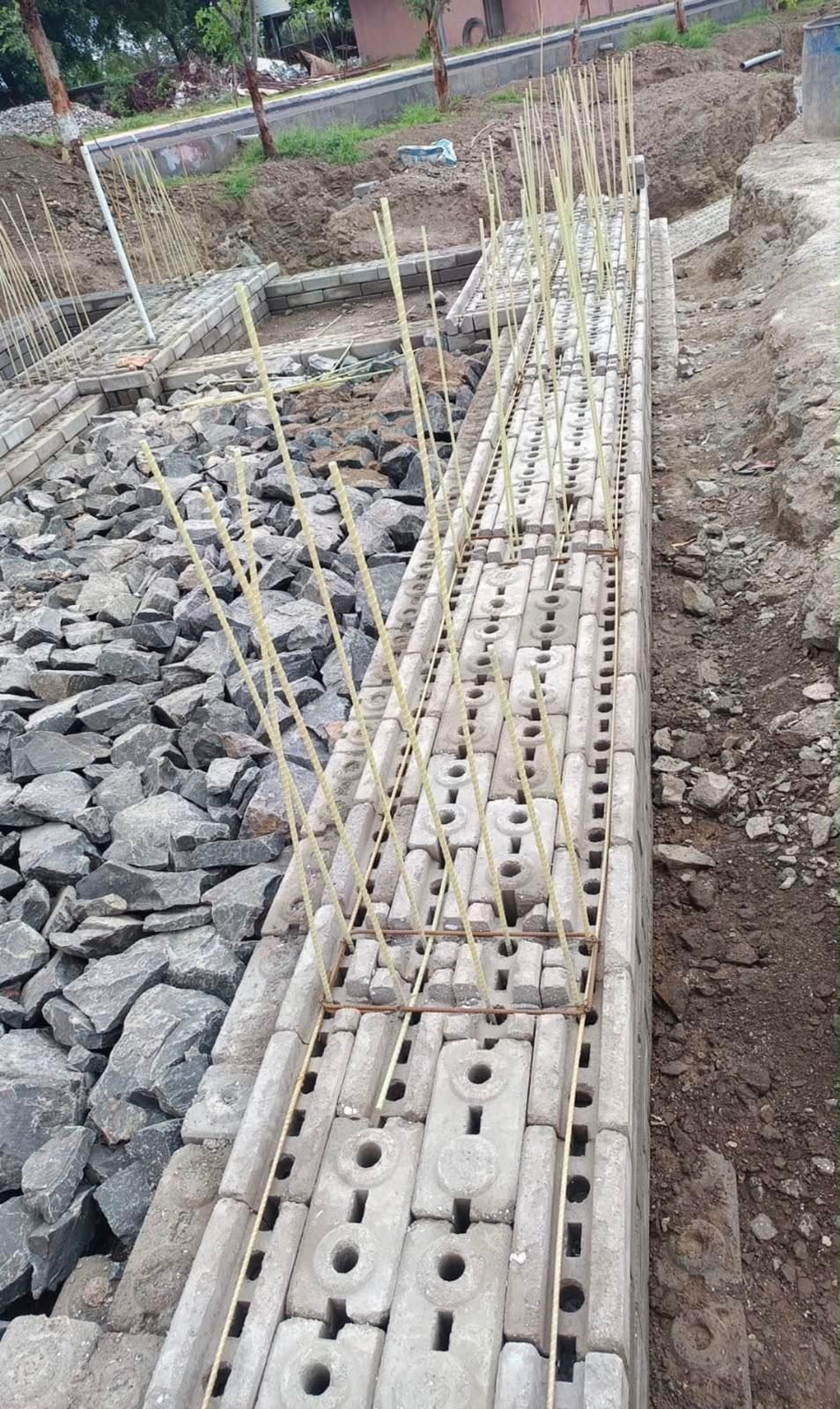
| Bridges, culverts and crash barriers | Decks, parapets and culverts face constant weathering; GFRP removes the main cause of rust-driven cracking and spalling |
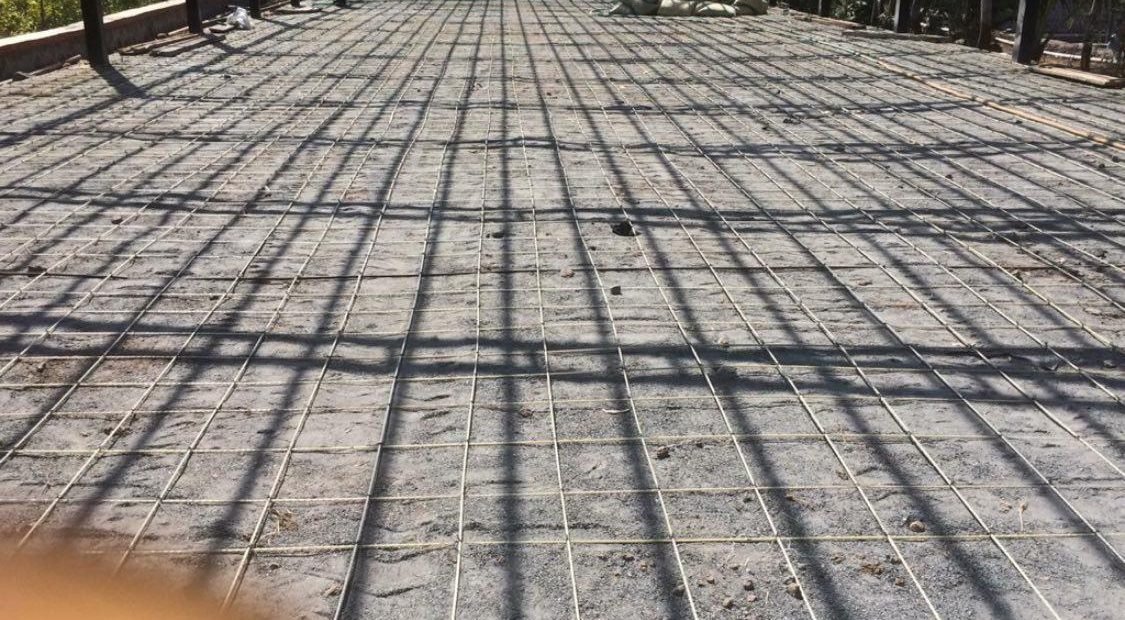
| Parking areas and industrial floors | Slab-on-grade is a low-risk use named by BIS; no rust staining or spalling from moisture, washing and spills |
| Drainage structures and manholes | Permanently wet conditions corrode steel quickly; GFRP is highly resistant to chlorides and chemical attack |
| Coastal and marine structures | Salt in the air and water is the fastest route to steel corrosion, a daily reality in cities like Mumbai |
| MRI rooms, labs and electrical areas | Non-magnetic and non-conductive, so it does not interfere with sensitive equipment |
GFRP Rebar vs Steel TMT Bars
GFRP is not a one-to-one swap for steel. It behaves differently, and the structure must be designed for its properties. Here is how the two compare:
| Property | GFRP rebar | Steel TMT bar |
|---|---|---|
| Weight | About one quarter of steel (12 mm bar: ≈0.24 kg/m) | 12 mm bar: ≈0.89 kg/m |
| Tensile strength | Higher than carbon steel; Indian bars are typically around 1,000 MPa | Fe 500 grade: minimum yield strength of 500 MPa |
| Stiffness (modulus of elasticity) | Lower; road projects require at least 44.8 GPa | About 200 GPa |
| Behaviour at failure | Stays elastic until it breaks; does not yield | Yields and stretches before breaking |
| Corrosion | Does not rust | Rusts unless protected |
| Concrete cover | Smaller cover can be provided | More cover needed in aggressive exposure |
| Electrical and magnetic | Non-conductive and non-magnetic | Conductive and magnetic |
| High temperatures | Lower endurance | Higher endurance |
| Bending on site | Not allowed; bends are made in the factory | Can be bent on site |
| Upfront material cost | Higher | Lower |
Because GFRP is less stiff than steel, IRC:137-2022 notes that designs are often governed by serviceability (deflection and crack width) rather than strength.
Site Practices: What IRC:137-2022 Requires
- Storage: keep bars off the ground on supports, and cover them with opaque sheets where temperatures exceed 45°C or they face direct sunlight.
- No bending on site: bending, straightening, heat cutting and shear cutting are not allowed. Order factory-bent shapes; the minimum inside bend radius is three times the bar diameter for sizes up to M25.
- Tying: use self-locking plastic ties or plastic-coated wire only.
- Splicing: lap splices only, with the engineer’s approval. Mechanical couplers are not permitted.
- Supports: use GFRP chairs, not metal chairs.
- No substitution: do not swap the specified bar diameter for another size.
- Cleanliness: keep bars free of oil, dirt and cement paste, and concrete promptly once bars are placed.
- No grounding: GFRP bars must never be used for electrical earthing.
GFRP Rebar Market: Key Numbers for 2025–2030
Market research firm MarketsandMarkets estimates the global GFRP rebar market at USD 0.54 billion in 2025, growing to USD 0.95 billion by 2030, a CAGR of 12.1%. It puts India’s GFRP rebar market at about USD 56.52 million in 2025, nearly doubling to USD 110.26 million by 2030, a CAGR of 14.3% and faster than the global average. Other research firms publish different figures, so treat these as indicative.
The market is still young and fragmented: the top five global players hold only about 15–20% of it, leaving plenty of room for regional manufacturers. Recent developments show where it is heading:
- Steel makers are moving in: Shri Bajrang Power and Ispat Limited, the company behind Goel TMT bars, has partnered with US firm Neuvokas (GatorBar) and ExxonMobil’s Proxxima resin business, with a licence for up to five GFRP rebar production lines in India.
- Domestic supply exists: IRC:137-2022 noted that Indian manufacturers commonly produce 6–16 mm bars, with sizes up to 40 mm available, so road projects need not depend on imports.
- Highway agencies abroad are scaling up: the new Alligator River Bridge in North Carolina, USA, uses GFRP reinforcement throughout its substructure, with about 5.1 million linear feet planned for the roadway. It is due to open in fall 2028.
Is GFRP Rebar Cost-Effective?
Mr Gadkari calls glass fibre bars cheaper, while IRC:137-2022 notes that their initial cost is higher than steel. Both can be true, depending on how you measure. Per kilogram, GFRP costs more. But a 12 mm GFRP bar weighs about 0.24 kg per metre against roughly 0.89 kg for 12 mm steel, so the price per running metre is much closer. IRC also points out that the conservative safety factors in current design codes can increase the amount of GFRP needed. The fair comparison is the designed cost of the element, plus what you save over its life.
The guideline points to savings that can offset the higher initial cost:
- Reduced concrete cover
- No corrosion-inhibiting admixtures in aggressive environments
- No cathodic protection or sacrificial anodes where they would otherwise be needed
- Longer service life with fewer repairs
- Lighter bars that are easier to transport, lift and place
Buying GFRP Rebar: A Quick Checklist
- Ask for compliance with IS 18256:2023 and, for road projects, the IRC:137-2022 requirements.
- For road projects, confirm the bars use vinyl ester resin with E-CR or R glass fibres.
- Ask for a technical data sheet for each diameter, covering tensile strength, modulus, bond strength, transverse shear strength, fibre content and glass transition temperature.
- Check key values for road use: fibre mass fraction above 70%, glass transition temperature above 100°C, tensile modulus above 44.8 GPa, bond strength above 7.6 MPa and transverse shear strength above 152 MPa.
- Order bent shapes from the factory, since bending on site is not allowed.
- Get your structural engineer’s design and sign-off. GFRP cannot be swapped bar-for-bar with steel.
FAQs: GFRP Rebar in India
Is GFRP rebar approved for highways in India?
Yes, for specific components. IRC:137-2022, framed at MoRTH’s request, permits GFRP bars in 13 listed road components, including concrete pavements, approach slabs, bridge decks, culverts, crash barriers, retaining walls and drainage structures. It is not permitted in components outside that list.
Can GFRP rebar be used in parking areas and industrial floors?
Yes. Slab-on-grade, such as pavements and floorings, is one of the low-risk uses BIS names in IS 18256:2023, subject to proper design and certification by the engineer-in-charge.
Can GFRP replace steel in columns and beams?
Current Indian guidance focuses on low-risk elements and the listed road components. International design codes do cover structural GFRP, but any use in primary structural members needs a qualified structural engineer’s design based on GFRP’s own properties.
What has Nitin Gadkari said about GFRP rebars?
In August 2022 he told a national conference of civil engineers that glass fibre steel can be used in place of steel. In a September 2024 interview with CNBC Awaaz, he said glass fibre bars cost less, are stronger and do not rust.
Does GFRP rebar rust?
No. It contains no iron, so it cannot rust, which is its biggest advantage over steel in wet, coastal and chemical environments.
Can GFRP rebar be bent on site?
No. Bends and stirrups must be made in the factory before the resin fully cures. Plan your bar bending schedule early and order bent shapes with the straight bars.
How much lighter is GFRP than steel?
GFRP has about one quarter of the density of carbon steel, which makes bars far easier to transport, carry and place on site.
Get GFRP Rebars from Grandform Fiber
Grandform Fiber is a Mumbai-based FRP manufacturer supplying corrosion-free products such as FRP manhole covers, FRP gratings and FRP signage to builders, contractors and civic projects. We also supply GFRP rebars from 3 mm to 32 mm, in coils and straight lengths, with bends and stirrups made in the factory. Planning GFRP rebar for a floor, pavement, parking area, drain or compound wall? Share your bar size, quantity and location on WhatsApp, or visit our Contact Us page.
Sources
- Indian Roads Congress, IRC:137-2022, Guidelines on Use of Fibre-Reinforced Polymer Bars in Road Projects (Part 1: Glass Fibre-Reinforced Polymer Bars), October 2022
- Bureau of Indian Standards, IS 18256:2023 (Standard of the Week)
- MarketsandMarkets, GFRP Rebar Market and India GFRP Rebar Market
- India Infra Hub, Gadkari on corrosion in coastal bridges (January 2022)
- PTI via Greater Kashmir, Gadkari on reducing steel and cement in roads (May 2021)
- CNBC Awaaz, interview with Nitin Gadkari on glass fibre rebars (September 2024)
- Swarajya, Gadkari at the national conference for civil engineers (August 2022)
- Neuvokas, GFRP rebar collaboration in India
- Coastal Review, New Alligator River Bridge (October 2026)